
Author: canpolat
-

Pure2DopeNet: Multimodal Neural Network-Based Predictive Modeling of Nanoparticle Properties from Pure Compounds
Can Polat, Mustafa Kurban, and Hasan Kurban – IOP’s Machine Learning: Science and Technology
-
Our novel multimodal approach to improve electronic structure calculations for nanoparticles is to be published in Machine Learning: Science and Technology
Happy to share that our latest research, titled ‘Multimodal Neural Network-Based Predictive Modeling of Nanoparticle Properties from Pure Compounds by Can Polat, Mustafa Kurban, and Hasan Kurban’, has been accepted for publication in Machine Learning: Science and Technology. Our novel approach marks a unique advancement at the intersection of materials science and multimodal approaches, offering…
-
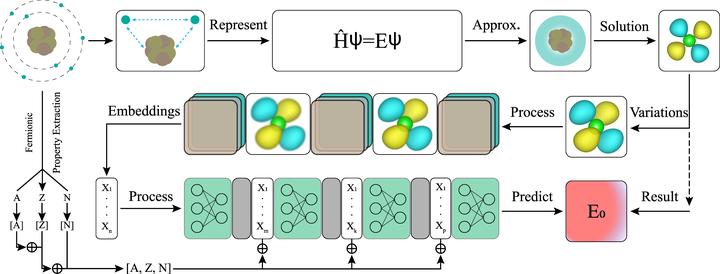
QuantumShellNet: Ground-State Eigenvalue Prediction of Materials Using Electronic Shell Structures and Fermionic Properties via Convolutions
Can Polat, Hasan Kurban, and Mustafa Kurban – Elsevier’s Computational Materials Science.
-
Excited to share that our recent research at the intersection of Computer Vision and Materials Science has been accepted for publication in Computational Materials Science!
Thrilled to share that our latest research, titled ‘QuantumShellNet: Ground-State Eigenvalue Prediction of Materials Using Electronic Shell Structures and Fermionic Properties via Convolutions by Can Polat, Hasan Kurban, and Mustafa Kurban’, has been accepted for publication in Computational Materials Science. This study marks a significant advancement at the intersection of materials science and computer vision,…
-
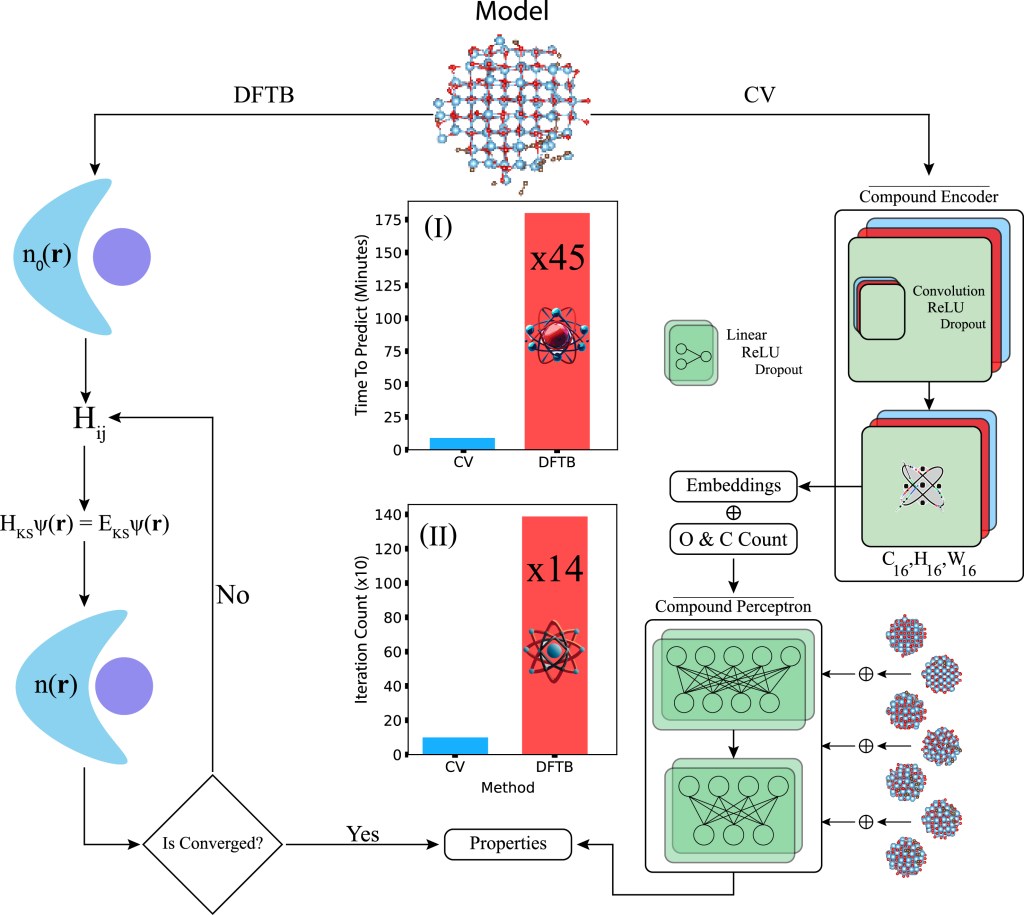
Enhancing the Electronic Properties of TiO2 Nanoparticles through Carbon Doping: An Integrated DFTB and Computer Vision Approach
Mustafa Kurban, Can Polat, Erchin Serpedin, Hasan Kurban – Elsevier’s Computational Materials Science (Accepted)
-
Our latest work at the intersection of Materials Science and Machine learning has been accepted to Computational Materials Science!
We are excited to announce that our latest research, titled “Enhancing the Electronic Properties of TiO₂ Nanoparticles through Carbon Doping: An Integrated DFTB and Computer Vision Approach by Mustafa Kurban, Can Polat, and Hasan Kurban”, has been accepted for publication in Computational Materials Science. This work represents an advancement at the intersection of materials science…
-

Materials as Graphs
Introduction Graph Neural Networks (GNNs) have emerged as a critical tool for modeling complex relationships and interactions in data, particularly in fields such as social and physical sciences. In this blog, we delve into the applications of GNNs in materials science (MS), an interdisciplinary field that combines elements of physics, chemistry, and engineering to understand…
-
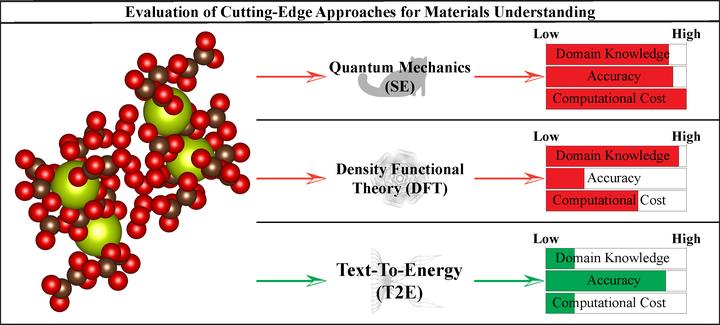
Text-To-Energy–Accelerating Quantum Chemistry Calculations through Enhanced Text-to-Vector Encoding and Orbital-Aware Multilayer Perceptron
Can Polat, Hasan Kurban, Mustafa Kurban – Scientific Reports (under-review)
 Kurban Intelligence Lab